
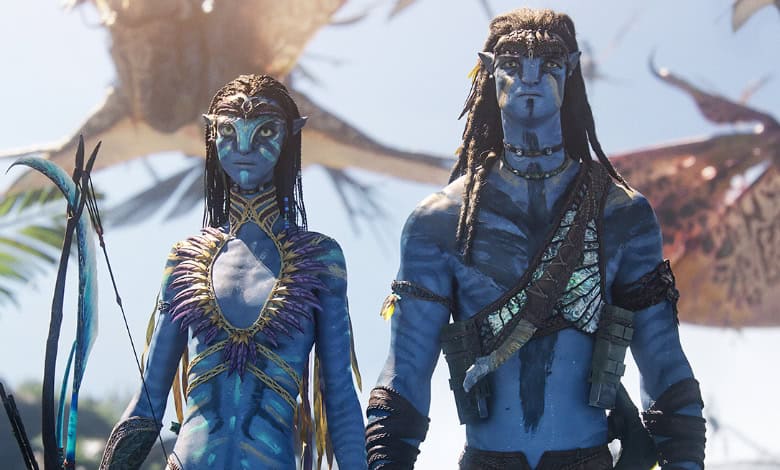
James Cameron is a genius.
If we didn’t know it after “Aliens” (1986), “Terminator: Judgment Day” (1991) and “Titanic” (1997), it’s clear after a trio of “Avatar” films.
Geniuses, alas, aren’t perfect.
Cameron’s eco-saga offers so many flaws that it’s hard to process them in one sitting. Visually magnificent and narratively sloppy, the saga shows no signs of improvement via “Avatar: Fire and Ash.”
It’s a mess. Yet you can’t look away, and Cameron’s refusal to give up on 3D may be its key selling point.
We pick up the saga shortly after the events of “Avatar: The Way of Water.” The Sully clan is still mourning the loss of Neteyam (Jamie Flatters), the family’s oldest son. The clan appears at peace all the same, but the evil/wicked/monstrous Colonel Quaritch (the great Stephen Lang) hasn’t given up the fight.
He’s still hell bent on taking over Pandora and setting up shop to make millions. That Military Industrial Complex doesn’t happen by itself, ya know.
This time, the Colonel teams with the leader of a fractured tribe known as the Ash people, led by Varang (Oona Chaplin). She’s a force of nature, cunning and deceptive.
Man, those ones and zeroes can make movie magic.
Together, they pose an even more dangerous threat to the Na’vi, and it will take the planet’s peace-loving members to find a way to thwart their latest attack.
If this all sounds familiar, it should.
RELATED: KARMA COMES FOR JAMES CAMERON’S ‘AVATAR’ SAGA
The elements trotted out here replicate some of the last film’s story. And, to a lesser extent, “Avatar.” It’s not uncommon for a franchise to repeat key elements, but at three hours and 15-odd minutes that repetition is, well, unconscionable.
Why would an artist like Cameron essentially copy himself, spending endless dollars in the process? His mission with the “Avatar” saga is to make audiences rethink their connection to Mother Earth.
That’s simplistic and noble, but his films are increasingly detached from that messaging. “Fire and Ash” isn’t as heavy-handed as before, but mostly because the lectures feel familiar at this point.
They didn’t move the pop culture needle the first time. There’s little chance that will change with Chapter 3.
What’s maddening this time around is the Quaritch/Jake Sully (Sam Worthington) tension. These mortal enemies squabble and fight, but it seems perfunctory at this point. At one key moment, they lay down their theoretical arms, as if Cameron himself isn’t sure why they’re still at each other’s throats.
This saga is exhausted, and even Cameron senses it.
The new film is once again overstuffed with characters, subplots and visual marvels, to the point where it deadens our senses. The first 10 minutes have us staring at the screen, our mouths agape at what Cameron and co. cooked up for our pleasure.
Digital trickery feels routine at this point. Not when you’re witnessing an “Avatar” spectacle.
That sense of wonder doesn’t last. At some point, we need compelling characters and a story that demands our attention. What we get are two marvelous villains, a crush of character beats that alternately impress and underwhelm and little sense of storytelling momentum.
Where is this all going? To the big battle, of course, just like in the first two films. If that’s a spoiler … then you don’t recognize franchise storytelling on autopilot.
And then there’s the dialogue. Some characters offer glib takes on life and native culture, a sop to spirituality and eco-worship. Take it or leave it, but “Fire and Ash” has a point of view and boasts a consistent approach here.
But Cameron, who co-wrote the script with Rick Jaffa and Amanda Silver, can’t help ladling out 21st century colloquialisms which take us out of the story. Again and again.
Think Christopher Reeve seeing that shiny brown penny in “Somewhere in Time.”
Isn’t there anyone on the crew who can tap them on the shoulder and say, “Maybe this kind of corny banter is beneath your vision?” And then, of course, duck, because that might not end well for the person who says it.
Cameron’s genius infects every frame of “Avatar: Fire and Ash.” His inability to see his own flaws does, too.
Hit or Miss: “Avatar: Fire and Ash” introduces us to new villains, old friends we barely cared about in the first place and a story that’s both exhausting and familiar.