
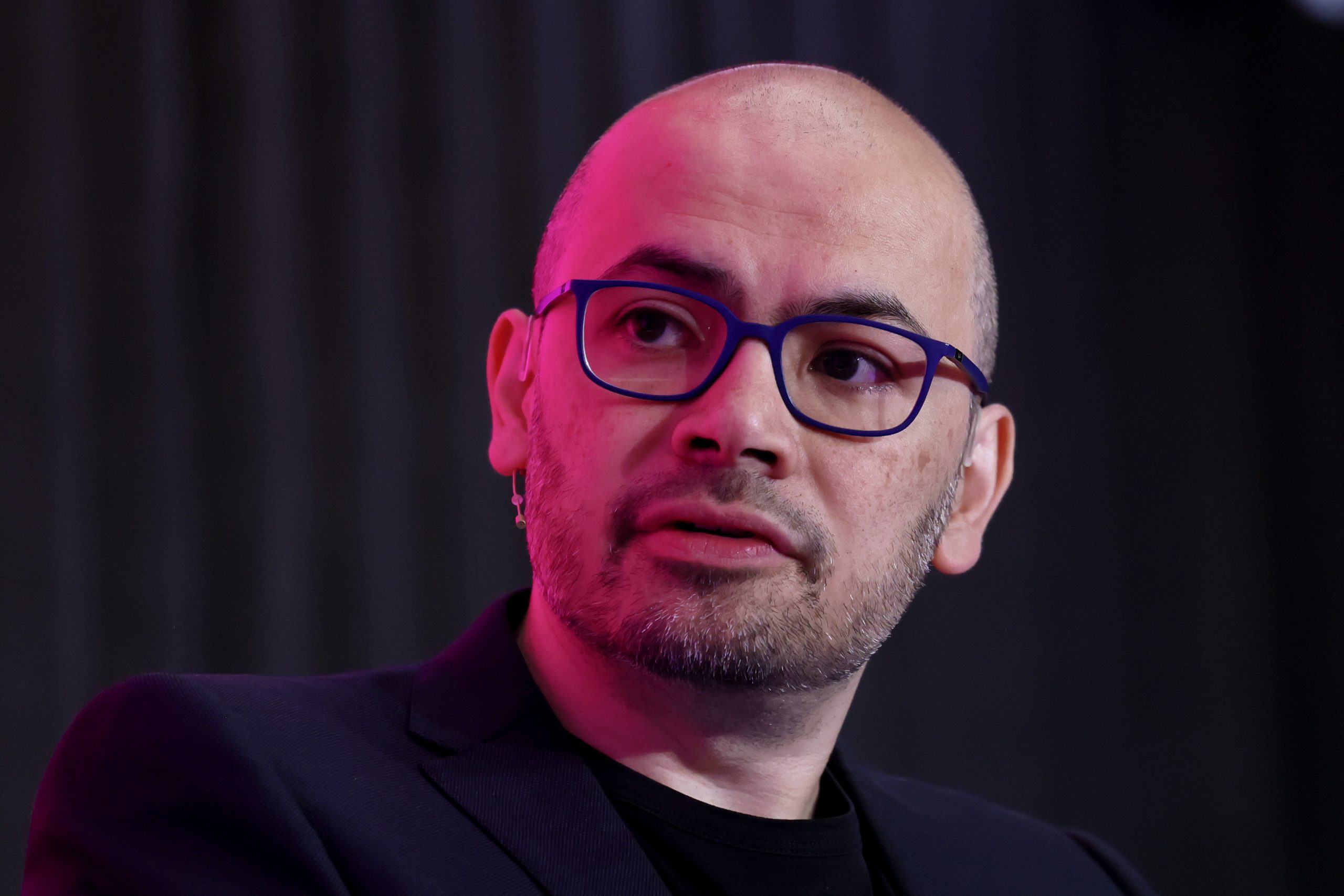
Hassabis argues the A.I. boom mirrors past tech bubbles, even as competition to reach AGI intensifies. Photo by Jack Taylor/Getty Images for SXSW London
For Demis Hassabis, CEO of Google DeepMind, there’s little doubt that parts of the A.I. industry are in a bubble. The harder question, he says, is figuring out which areas are fueled by hype and which truly have the potential to be transformative.
“There are parts of the A.I. ecosystem that are probably in bubbles,” Hassabis said during a recent episode of Google DeepMind: The Podcast. He pointed to the soaring valuations of nascent startups as a particular red flag, noting that companies landing “tens of billions of dollars valuations just out of the gate” are probably not sustainable.
It shouldn’t come as a surprise that Hassabis doesn’t put DeepMind, co-founded by him in 2010 and still led by him following Alphabet’s 2014 acquisition, in this category. When it comes to investment from Big Tech, he said, “there’s a lot of real business underlying that.” A.I., in his view, is “overhyped in the short term and still underappreciated in the medium to long term.”
Hassabis’ confidence is rooted in firsthand experience, particularly in science. Last year, he won a Nobel Prize in Chemistry for his work on AlphaFold, an A.I. system that predicts protein structures. He also leads Isomorphic Labs, an Alphabet subsidiary focused on applying A.I. drug discovery.
Still, Hassabis is clear-eyed about how far the technology has to go, especially when it comes to advanced milestones like AGI. Today’s systems can deliver Ph.D.-level performance in some areas, even earning honors like gold medals from the International Mathematical Olympiad, while still making basic errors. Closing those inconsistencies is essential, he said. “We’ve got to close those gaps.”
Beyond pushing toward human-level intelligence, Google DeepMind is focused on building so-called world models—systems that understand not just language, but the physical world itself. Through products like its Genie systems, the lab is working on A.I. that can grasp how objects move and interact. That kind of physical understanding, Hassabis said, is crucial for advances in robotics and universal assistants.
World models could also reshape gaming, a longtime passion of the Google DeepMind CEO. Hassabis began his career as a video game programmer, later founding Elixir Studios, a games development company, and serving as lead A.I. programmer at Lionhead Studios. Physical A.I., he suggested, could one day enable “the ultimate game—which of course, was maybe always my subconscious plan.”
Today, Hassabis is one of a small group of leaders shaping the future of A.I. He describes himself as friendly “with pretty much all of them,” referring to fellow tech executives—a level of harmony that isn’t universal in the field. “Some of the others don’t get on with each other.”
Those cordial relationships don’t erase the competitive pressure. Google is racing alongside competitors like OpenAI, Meta and Anthropic to achieve AGI, a contest that has unleashed a wave of investment reminiscent of the dot-com boom. “It’s hard, because we’re also in the most ferocious capitalist competition there’s ever been.”
