
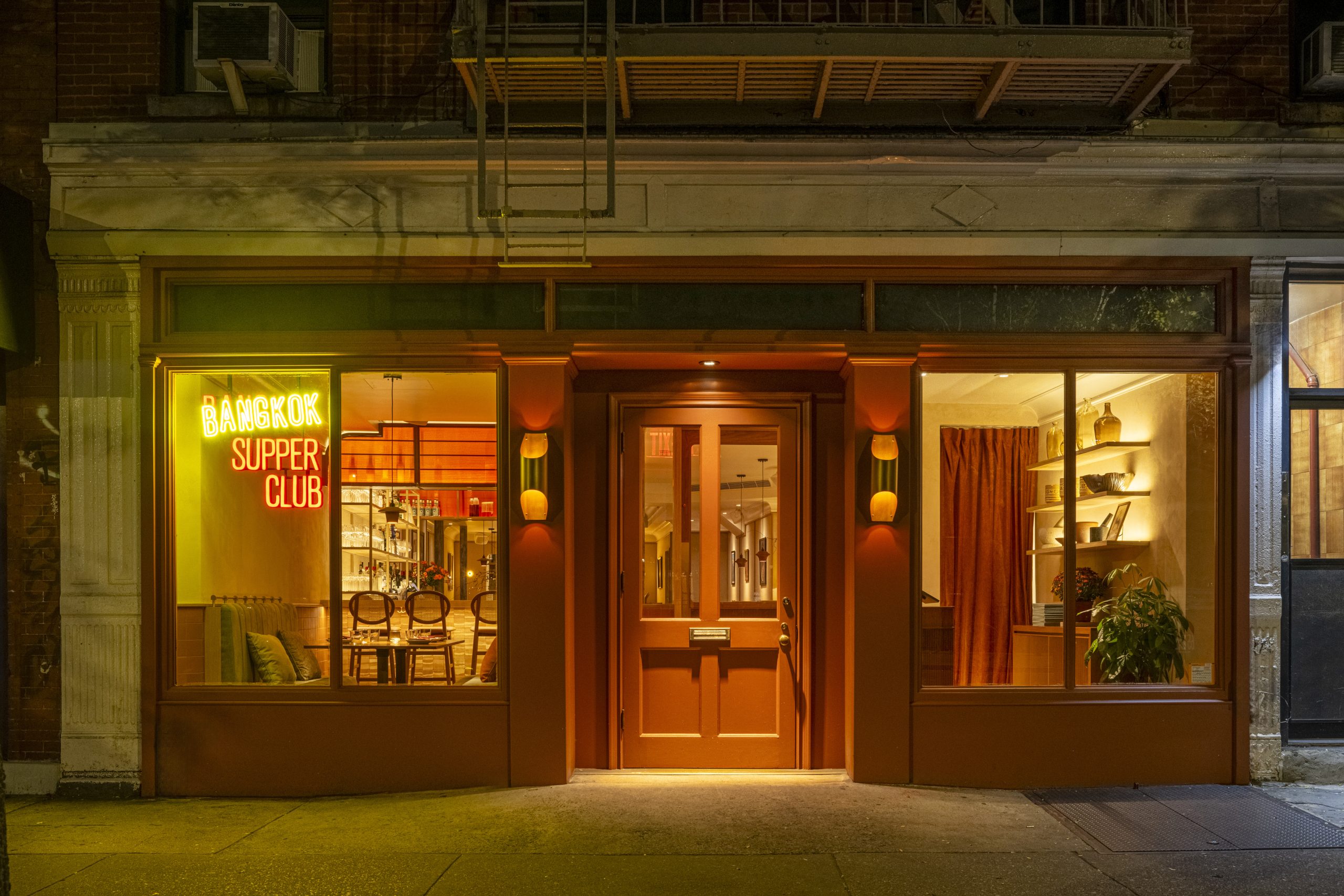
Chef Wittawat shares how he balances authenticity with innovation, builds resilient teams, maintains relevance in a hyper-competitive market and envisions the future of Thai dining on the world stage. Evan Sung
This Q&A is part of Observer’s Expert Insights series, where industry leaders, innovators and strategists distill years of experience into direct, practical takeaways and deliver clarity on the issues shaping their industries. In New York City’s constantly mutating dining landscape, where concepts appear overnight and disappear just as quickly, Chef Max Wittawat has managed to build something far more enduring: a restaurant that feels both distinctly Thai and unmistakably New York.
As the chef and creative force behind Bangkok Supper Club, Wittawat has translated Bangkok’s kinetic late-night food culture into a polished, modern dining experience that mirrors the energy of his hometown while meeting the realities of the city’s tightly wound restaurant economy. His approach rejects nostalgia and instead embraces a forward-looking interpretation of Thai cuisine driven by collaboration, constant experimentation and a deep respect for regional flavors.
In just two years, Bangkok Supper Club has become one of the city’s most talked-about chef-driven concepts, known for seasonal tasting menus, unexpected partnerships and a high-touch hospitality model that blurs the lines between dining and nightlife. Wittawat’s leadership is shaped by years in Thailand’s corporate hospitality world, giving him the operational rigor needed to support the creative freedom that defines the restaurant’s identity.
At a moment when “modern Asian” concepts are proliferating across New York, Wittawat stands apart by using storytelling as the backbone of his cuisine, inviting guests to understand the cultural, personal and culinary influences behind each dish. From sustainability commitments to zero-waste-inspired cocktails to multisensory late-night dining experiences, his work demonstrates how a restaurant can be both deeply rooted in culture and fully attuned to a global audience.
Bangkok Supper Club was inspired by Bangkok’s late-night dining culture. What drew you to recreate that energy in New York, and how did you adapt it to the realities of the city’s dining economy?
Bangkok Supper Club was born from my memories of Bangkok at night—the energy, the noise and the way the night seems to keep unfolding. In Thailand, late-night dining is its own culture. After dinner or drinks, you don’t go home; you go out again. Maybe to a street stall for noodles, a grill stand for skewers or a small restaurant for something spicy. Nights out are about social connection, spontaneity and sharing every moment with friends or family. That feeling of late-night gathering is exactly what I wanted to bring to New York.
For me, Bangkok Supper Club had to be a place where people come to celebrate, connect with friends and enjoy food that feels inventive but approachable. The space needed to feel alive in every way—the music, the lighting, the flow of service and the way our beverage program interacts with the food were all designed intentionally to capture that vibrancy of Bangkok, blurring the lines between dining and nightlife.
New York operates on a different pace. People plan their meals out weeks in advance, and the city doesn’t have the same late-night dining culture. My goal was to capture the feeling of Bangkok—the warmth, the continuous energy and that sense that the night is always still young. We translated that spirit into a polished, thoughtful space that fits within this city while still keeping the heartbeat of my home alive.
That balance between authentic energy and New York sensibility is what defines Bangkok Supper Club.
 The Bangkok-born chef behind one of New York’s most talked-about dining rooms aims to maintain momentum through collaborations, regional flavors and a business model grounded in both rigor and imagination. Kelsey Cherry
Late-night dining often runs counter to traditional fine-dining hours. What have you learned about balancing operational challenges—staffing, costs, turnover—with the creative freedom of that format?
One thing people are often surprised by is that Bangkok Supper Club does not operate as late as restaurants in Thailand, despite that being the inspiration for the concept. In Bangkok, late-night dining often goes into the early morning, but in New York, the economics, regulations and culture make that difficult. We blur the lines of dining and nightlife by operating closer to traditional fine-dining hours, which helps us stay consistent and protect the well-being of our team, all while capturing the spirit and energy of a late-night dining atmosphere through our food.
Operationally, we face the same challenges as everyone else, but I feel fortunate to have a core team that has been with us since day one. Turnover is naturally part of this industry, and people come and go, but the stability within our leadership team gives us a strong foundation. We built systems and staffing models that are realistic for our business, and we try not to deviate from them. That structure allows us to manage labor costs, set clear expectations and maintain quality every night.
A more casual late-night format usually has higher turnover and more flexibility, but because we aim to operate at a fine-dining level, we need to ensure our team is consistent, supported and committed. The key has been finding the balance between structure and creativity. When operations are solid and everyone feels taken care of, the kitchen and bar have the freedom to experiment, evolve and create the kind of energy that defines Bangkok Supper Club.
This balance allows us to bring the spirit of Bangkok’s nightlife to New York while still running a thoughtful, sustainable and disciplined operation.
Your partnership with 55 Hospitality is a major part of the restaurant’s success. What made the collaboration work from a business perspective, and how did you align creative and operational priorities early on?
My partnership with 55 Hospitality works because we each bring something essential to the table, allowing Bangkok Supper Club to flourish as it’s meant to. From the beginning, Jenn Saesue and Chat Suansilphong (55 Hospitality co-founders) created a solid foundation that allowed me to focus fully on the food and the creative direction. Their strength is in running a business at a high level. They’re experts in operations, finances, marketing, logistics and all the systems that keep a restaurant stable and scalable. That foundation has allowed me to hyper-focus on continuously evolving the menu, shaping the energy of the space and leading the kitchen without being overwhelmed by every operational detail.
Early on, we made sure our priorities were aligned. We agreed that the guest experience, team culture and quality of the food would always lead the conversation. At the same time, we built clear structures around budgeting, staffing and daily operations, so the business could grow in a disciplined way. That clarity gave me the freedom to push creatively, try new ideas, develop seasonal menus and collaborate with other chefs, while knowing the financial and strategic side was being managed thoughtfully.
What makes the partnership successful is trust. They trust my vision for the food and the atmosphere, and I trust their expertise in keeping the business healthy. When those two things work together, creativity and stability become one and the same, and that is what allows Bangkok Supper Club to evolve while maintaining the excellence guests expect.
Many chef-driven restaurants struggle with sustainability once the initial buzz fades. How do you and your partners think about maintaining momentum and long-term relevance in such a competitive market?
For us, the goal is long-term relevance through continuous creation—exploring new flavor profiles and inspiration points that give guests new reasons to return. Innovation is part of who we are. This year alone, we developed more than forty new dishes through chef collaborations, seasonal tastings and specialty menus. That constant evolution keeps the experience exciting for both our guests and our team.
Collaborations are a constant source of inspiration. Partnering with chefs from spots, including Lysée, Marea and Theodora, allowed us to combine perspectives, introduce flavors people don’t typically associate with Thai cooking and build a wider creative community.
This fall, we created a three-part dinner series that put a spotlight on Bangkok’s late-night food culture, with each experience built around an entirely new menu—whether inspired by a specific region or shaped through chef collaborations. It pushed us creatively and gave guests something truly new to discover every time.
The kitchen counter tasting menu we launched this summer has also become an important creative touchpoint. Beyond offering a wide range of bites in a single meal, it gives me the chance to connect directly with guests who join us from all over the world. Those personal, more intimate interactions ground us and create a direct line from person to plate.
In a competitive market, momentum comes from staying curious, building community and never letting the restaurant stand still. As long as we keep creating and evolving, we hope that Bangkok Supper Club will remain relevant in a way that stays true to our vision.
 Crisp pork jowl served with bold, contrasting elements, embodying the Bangkok street-food influences that shape Wittawat’s cooking. Evan Sung
Bangkok Supper Club feels both distinctly Thai and deeply New York. How do you balance the tension between preserving cultural authenticity and creating something new for a global audience?
For me, authenticity has always been at the heart of Bangkok Supper Club. I’m from Thailand, and after moving to New York just two years ago, sharing a real understanding and pride in regional Thai flavors and techniques continues to guide everything we do. But cooking in New York also means serving an audience that values individuality, creativity and personal expression—so the food naturally evolves through local inspiration.
I try to bring my own personality into every dish, drawing from my travels, my training and the different cooking styles I’ve learned along the way. And it goes beyond the food—the interior, the uniforms, the guest experience, even the floral arrangements all come from wanting to create a space that feels like an extension of myself. Those small touches make the experience feel both traditionally Thai and uniquely my own.
Of course, I can’t recreate Thailand exactly. We’re not in a tropical climate, and some ingredients simply don’t exist here in the same way. My goal is to honor the spirit and balance of Thai cuisine while adapting to what’s local and seasonal. I’m always exploring new ingredients and techniques that let me capture the flavors of home in a way that feels true but still fresh. The balance is about respecting tradition while embracing evolution. It’s rooted in where I come from, but shaped by the creativity and energy of New York dining.
Some restaurateurs chase scale. Others seem to pursue depth. How do you think about growth? Is there a business model for expanding without diluting the intimacy and storytelling that define Bangkok Supper Club?
For me, growth is about balance, as is a majority of what I do. Of course, we want the business to grow, but it’s just as important that Bangkok Supper Club stays special and distinctive. The intimacy, the storytelling and the connections we build with our guests and our team are what make this place meaningful, and I never want to lose that. At the same time, we need to run a sustainable business. Growth helps us support our team, create new opportunities and keep investing in creativity and innovation. Every decision we make comes back to that—how to grow in a thoughtful way without losing the heart of what we do.
The guiding principle is staying true to myself, to my flavors and to the vision I have for the restaurant. Every new idea, menu or collaboration is meant to deepen the guest experience, not dilute it. For me, growth isn’t just about adding more seats or more locations. It’s about sharing the experience we’ve created with more people while keeping it authentic, personal and intentional.
There’s a strong narrative component in your food: it tells a story without relying on nostalgia. What role do you think storytelling plays in consumer engagement?
Storytelling plays a huge role in how guests connect with what we do. Thai cuisine is full of tradition, but it’s also constantly evolving, and I want people to understand that balance. By sharing the inspiration behind each dish—why I created it, where the influences come from and how we’re reinterpreting traditional flavors in New York—guests can see that while the core tastes stay true, there’s also creativity and personal expression in every plate.
It also empowers our team. When they understand the stories behind the dishes, they can guide guests in a way that feels genuine and meaningful. Those conversations often become the most memorable part of someone’s night. We take the same approach online through our Instagram account. Showing the process behind new dishes, from the first idea to the final plate, helps people understand our philosophy and stay engaged with what we’re creating. For me, storytelling gives context. It helps us communicate who we are, celebrate Thai culture and invite guests to experience the food on a deeper level—not just through taste, but through understanding and connection.
 Wittawat aims to balance creativity and discipline with Thai flavors interpreted through a modern, chef-driven lens. Evan Sung
New York’s dining scene is often described as oversaturated. How do you differentiate Bangkok Supper Club amid a wave of “modern Asian” concepts vying for attention?
Constant creativity and a clear vision. That’s really how we differentiate ourselves in a crowded dining scene. I develop three to four tasting menus a year, along with seasonal specials and collaborations, which keep the experience fresh and give guests something truly new every time they visit. Even within our own hospitality group, each Thai concept has its own identity. Fish Cheeks and Bangkok Supper Club are both Thai, but they offer completely different experiences and cuisines.
We’ve seen restaurants take inspiration from what we do, and I take that as a compliment. It shows there’s real excitement around Thai food right now, and it pushes us to keep evolving. But our focus is always on originality rather than chasing trends, making sure we hold onto our own voice in the market. In the end, standing out comes from staying true to who we are, continuing to create and innovate and offering a distinct experience guests can’t find anywhere else.
Your career spans corporate hospitality and deeply personal projects. How did your time at larger groups like Minor Food shape your leadership or your approach to building teams?
My time at Minor Food Group taught me a lot about how to run a restaurant as a business while still supporting creativity in the kitchen. Working in a larger organization showed me the importance of strong systems, consistency and clear communication. I learned how to document recipes, standard operating procedures and workflows so that anyone on the team, no matter their background, could execute the food to the same standard every time.
That experience has shaped how I lead at Bangkok Supper Club. I want my team to feel confident, supported and capable, and having solid systems in place allows them to focus on learning, experimenting and growing. It also gives me the freedom to create, explore and collaborate, knowing the foundation of the restaurant is strong.
How did you approach crafting an experience that seamlessly blends all three?
For us, the ambiance and bar program aren’t separate from the food—they’re all part of the same experience. That’s how late-night dining works in Bangkok, and it’s the feeling we want to bring to Bangkok Supper Club. We think about how everything comes together—the dishes, the drinks and the energy of the room. Our bar program works hand-in-hand with the kitchen; several cocktails use ingredients that might otherwise go to waste, turning kitchen leftovers into thoughtful, creative drinks. Being part of Mill’s Make Food Not Waste initiative this year, which allowed us to create a zero-waste-inspired dish, has only strengthened our commitment to sustainability.
The collaboration between the bar and kitchen ensures that every element complements the others. Flavors from the dishes inspire the cocktails and the drinks are designed to elevate the dining experience rather than simply sit alongside it. Beyond that, the music, the lighting and the overall energy of the room are all intentionally chosen so guests feel wrapped in a lively, immersive environment that reflects a true Thai late-night experience.
Our goal is to create a place where everything is connected: the food, the drinks and the atmosphere, so guests can feel the thoughtfulness, intention and character behind the Bangkok Supper Club experience.
 Chilean sea bass in a vivid chakram curry, a dish that captures the restaurant’s broader ethos: bold, regional Thai profiles expressed through contemporary plating. Evan Sung
How do you see Thai cuisine evolving internationally? Are there trends or directions that excite you or stand out?
It is exciting to see how much more people around the world have grown to know about Thai food. Guests are more curious and well-versed in the cuisine, which makes it even more rewarding to introduce them to dishes that go beyond the familiar. The more people understand Thai flavors, the more open they are to the ideas and creativity I bring to the table.
Globally, I see two trends emerging. One is restaurants focusing on casual Thai food, highlighting approachable street or home-style dishes. The other is chef-driven concepts that are more creative and experimental. These places may not serve a classic pad Thai, but they capture the essence of Thai cuisine by delivering the traditional flavors using local ingredients and contemporary techniques.
What excites me most is that Thai food can evolve while staying true to its balance, freshness and vibrancy. It opens opportunities to share our culture in new ways and connect with a global audience through creativity and flavor.
For emerging chefs looking to introduce regional cuisines to new markets, what’s one business insight you’d share before they open their first restaurant?
For any chef bringing a regional cuisine into a new market, the biggest piece of business advice I’d offer is this: understand the market before you step into it. If you’re lucky enough to have a great business partner, that insight and support are invaluable. If you don’t, you have to become that person for yourself by studying the landscape, observing how people are eating, and really understanding the gaps.
You can’t just be another voice doing what everyone else is doing, because you’ll get diluted fast. What guided us was knowing exactly who we are and where we could offer something genuinely different. Look for the space where your perspective adds something new, not where you’re repeating what already exists.
 Bangkok Supper Club’s dining room reflects Chef Max Wittawat’s approach: a space shaped by Bangkok’s late-night energy but built for the realities of New York hospitality. Evan Sung
Looking ahead to 2026 and beyond, how do you see the intersection of dining and cultural identity evolving, and where does Bangkok Supper Club fit in that future?
I think that the lines between dining and nightlife have blurred in such a way that restaurants aren’t where you go before you go out; they are the night out. Guests are increasingly seeking concepts that are destinations in themselves, offering an experience that combines food, beverage and vibe. This trend reflects a broader cultural shift. People want experiences that feel immersive, social and meaningful, all in one space.
Bangkok Supper Club fits naturally into this evolution of an all-encompassing experience. Our goal has always been to create a vibrant environment where Thai culture and cuisine are at the center, but in a way that feels accessible and exciting for a global audience. We bring together inventive, elevated flavors with an atmosphere inspired by Bangkok’s late-night culture, resulting in an experience that is social, immersive, and celebratory.
Looking ahead, I want to utilize Bangkok Supper Club to continue to bridge cultures by nurturing a space where dining is not just about the food on the plate, but about connection, community and the energy of shared experiences.
