
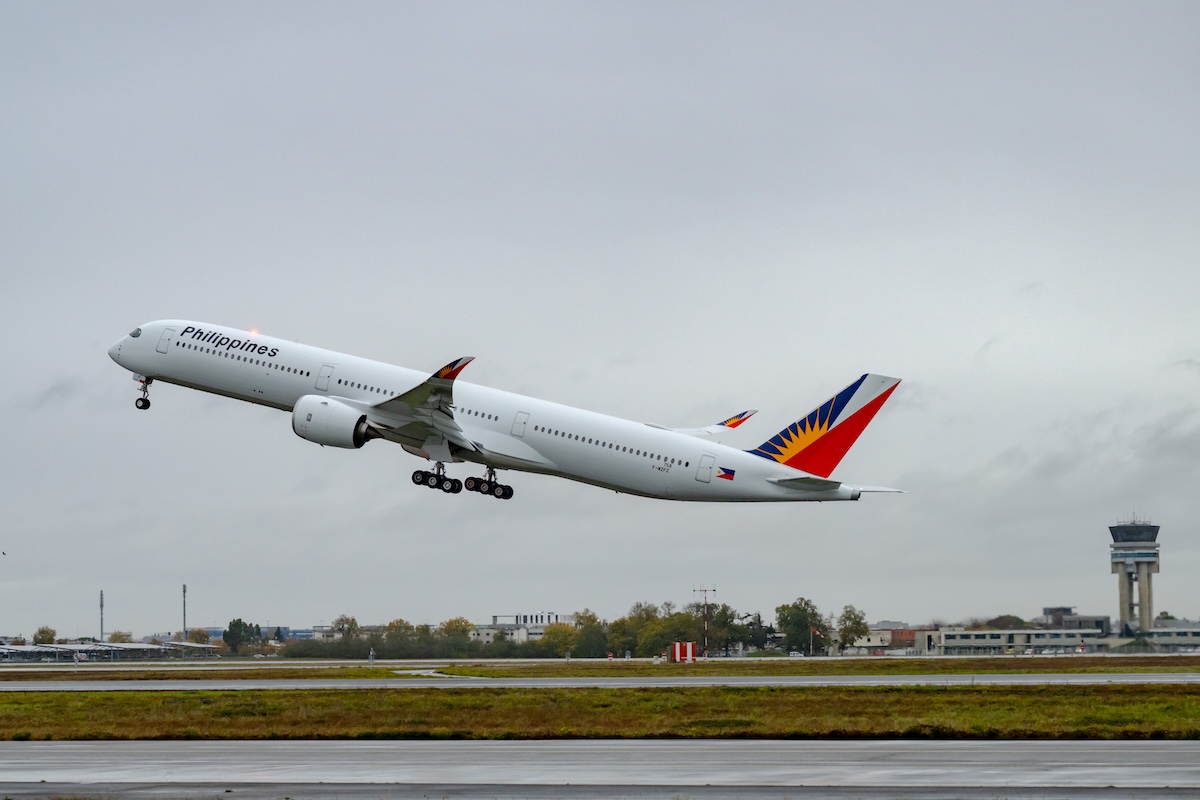
Toulouse, France – Philippine Airlines has taken delivery of its first Airbus A350-1000, becoming the 10th airline worldwide to operate the largest variant of the A350 family, Airbus’ flagship long-range widebody.
Philippine Airlines takes delivery of its first Airbus A350-1000
Configured in a premium three-class layout with 382 seats across Business Class, Premium Economy, and Economy cabins, the aircraft is tailored to serve high-demand long-haul routes. Passengers will benefit from wider seats, improved legroom in select sections, larger overhead storage, and upgraded in-flight entertainment and connectivity. The quiet cabin, advanced mood lighting, and optimized air quality are designed to reduce fatigue on ultra-long-haul journeys.
The arrival of the A350-1000 opens a new chapter in Philippine Airlines’ long-haul operations across the Pacific. Incorporating the latest aerodynamics, carbon-fiber fuselage and wings, and fuel-efficient Rolls-Royce Trent XWB-97 engines, the aircraft delivers lower fuel consumption and extended range compared to previous-generation widebody jets. These capabilities will enable the flag carrier to introduce more nonstop services to major destinations in North America, increase frequencies on existing routes, and explore new city pairs that were previously not viable.
This delivery is the first of nine A350-1000s that Philippine Airlines will receive under its fleet expansion and modernization programme. The remaining aircraft are scheduled to join the fleet over the next few years, giving the airline the flexibility to increase capacity on high-demand routes and adjust its network in response to market growth.
The new A350-1000s will operate alongside Philippine Airlines’ existing A350-900 aircraft, which are already deployed on key long-haul and flagship routes. By operating both A350 variants, the airline can optimize capacity and operating costs, assigning the larger A350-1000 to trunk routes such as those to the United States while using the A350-900 on routes with more moderate demand. This commonality within the A350 family also brings efficiencies in crew training, maintenance, and spare parts management.
With the addition of the A350-1000, Philippine Airlines is further strengthening its widebody fleet strategy, positioning itself to grow long-haul capacity, enhance schedule reliability, and deliver a more consistent premium travel experience. The A350 family’s efficiency also supports the airline’s sustainability goals by reducing fuel burn and carbon emissions per passenger.
The A350, the world’s most modern widebody aircraft, has set new standards for intercontinental travel. Its all-new design combines state-of-the-art technologies with advanced aerodynamics to deliver outstanding operational efficiency and superior passenger comfort. New-generation engines and extensive use of lightweight materials provide a 25 percent reduction in fuel burn, operating costs, and carbon dioxide (CO?) emissions compared with previous-generation competitor aircraft. The A350’s spacious Airspace cabin features wide seats, high ceilings, and ambient lighting, all designed to create a calm and relaxing onboard atmosphere.
As with all Airbus aircraft, the A350 can operate on up to 50% Sustainable Aviation Fuel (SAF). Airbus aims to have its aircraft up to 100% SAF-capable by 2030.
At the end of November 2025, the A350 Family had won nearly 1,500 orders from 66 customers worldwide.
Manila Travel Tour Packages You Should Try
Klook.com
Follow and subscribe to OutofTownBlog.com on Facebook , Twitter, Instagram, Pinterest, and YouTube for more Travel-related updates.