
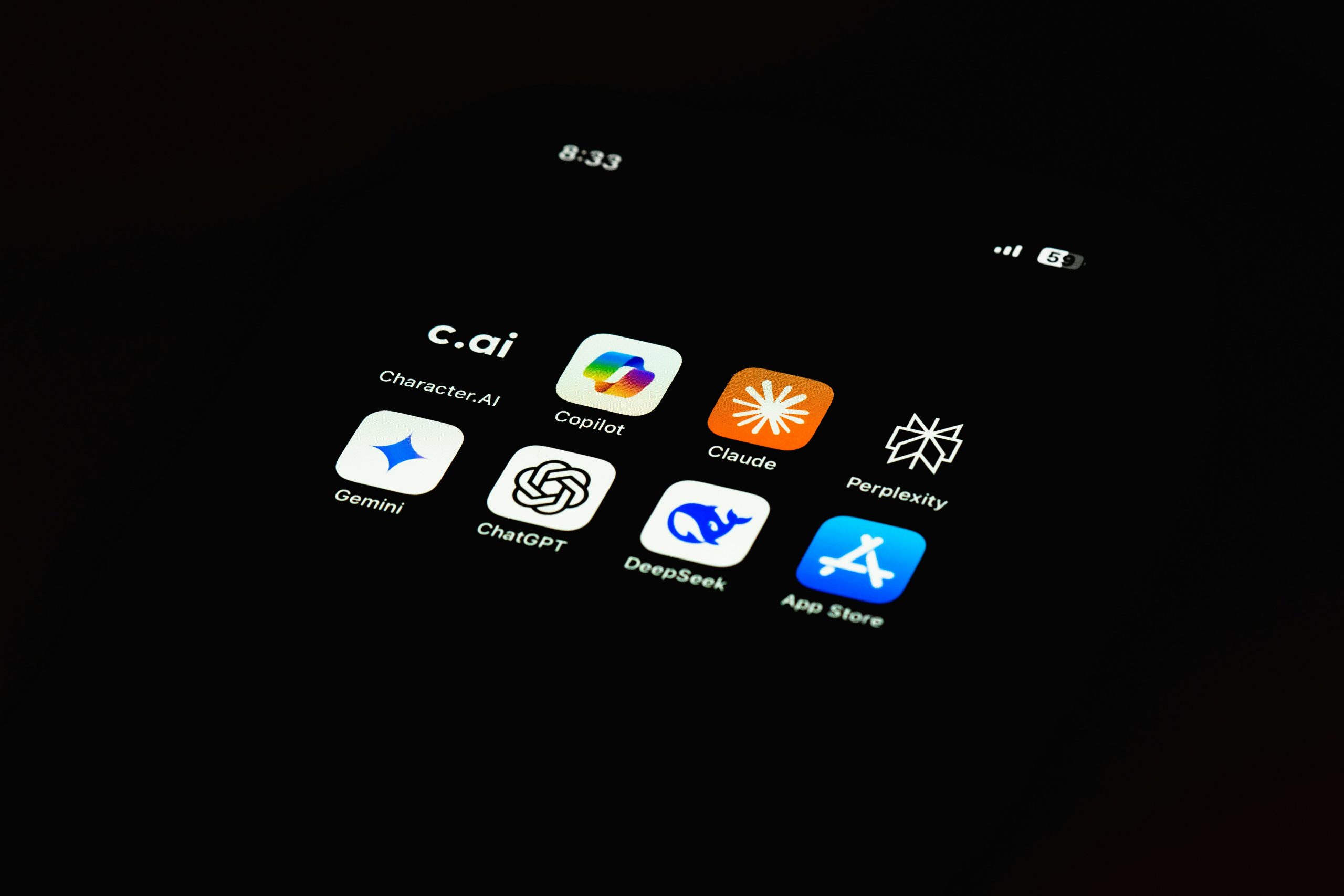
Gemini’s user base is expanding at multiples of ChatGPT’s, signaling a new phase in the chatbot race. Unsplash
Google’s Gemini is in a hyper-growth phase and rapidly closing the gap with OpenAI’s ChatGPT. Between August and November, Gemini’s global monthly active users rose about 30 percent, roughly six times ChatGPT’s growth, according to web and mobile app traffic data from Sensor Tower, first reported by The Information. The surge suggests that Google has reached an inflection point following the release of Gemini 3, its latest A.I. model, which outperforms GPT-5 on several key metrics.
Gemini is gaining ground across both web and mobile. Global web traffic to Gemini doubled during the August–November period, compared with a 1 percent increase for ChatGPT, Sensor Tower found. Mobile downloads of Gemini rose at about twice the rate of ChatGPT during that period.
User engagement is also on the rise: Gemini users now spend around 11 minutes per day in the app, more than double the time logged in March. Sensor Tower estimates that twice as many U.S. Android users access Gemini through the operating system itself rather than the standalone app—a built-in distribution channel that ChatGPT lacks, despite its integration into Apple’s iOS.
ChatGPT, however, remains the most widely used chatbot. Sam Altman said in October that ChatGPT had more than 800 million weekly users, a figure that has since grown to nearly 900 million, according to The Information, which cited a source familiar with the company’s internal data.
Google’s Gemini 3 Pro model outperforms ChatGPT 5 Pro and the 5.1 “thinking” model in reasoning, multimodal comprehension and multiple benchmark tests. On Humanity’s Last Exam—a 2,500-question assessment spanning math, science, logic and history—Gemini 3 Pro scored 37.5 percent accuracy versus ChatGPT’s 26.5 percent. Third-party evaluations echo the trend: Vellum’s agentic A.I. leaderboard ranks Gemini 3 Pro ahead of GPT-5.1 in reasoning and high-school math, based on GPQA Diamond and AIME 2025 benchmark results.
But as Gemini rapidly expands its footprint, regulators are pressing Google on whether its advantage stems from technological innovation or from market power. Authorities are examining whether Google unfairly diverts traffic away from publishers and limits competitors’ access to comparable data.
Yesterday (Dec. 9), the European Commission opened a formal antitrust investigation into whether Google’s AI Overviews and AI Mode misuse publisher content without compensation, thereby bolstering the company’s market dominance.
The inquiry follows a July complaint from the Independent Publishers Alliance, which argues Google’s A.I. summaries siphon revenue from news outlets. The EU probe fits into a broader pattern of scrutiny under the Digital Markets Act, including earlier penalties tied to Android and Google’s advertising practices.
