
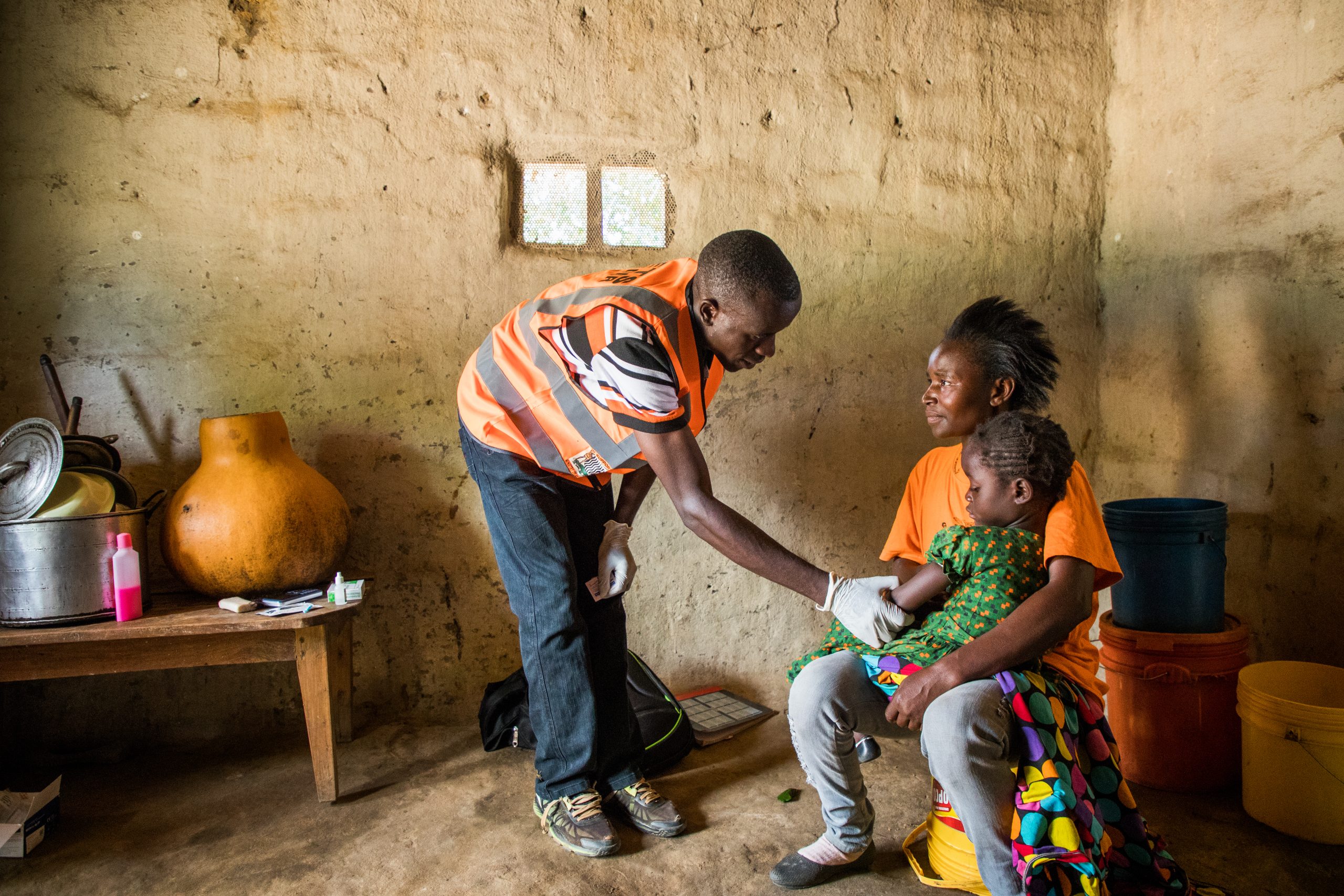
A community health volunteer visits a child who has malaria in Makalongo village, Serenje District. ©Gates Archive/John Healey
In the 25 years since the Gates Foundation was established by Bill Gates and his then-wife Melinda French Gates, the organization has helped drive a steady decline in global child mortality rates. In 2000, more than 10 million children died before the age of five—a number that has since been more than halved. This year, however, a concerning reversal has begun to emerge.
Child deaths are forecast to rise in 2025 for the first time this century, according to the Gates Foundation’s annual Goalkeepers report. The primary cause? Widespread cuts to government funding from wealthy nations like the U.S.
“We could be the generation who had access to the most advanced science and innovation in human history—but couldn’t get the funding together to ensure it saved lives,” said Gates in the report.
Around 4.6 million children died before their fifth birthday in 2024. This year, that figure is estimated to have increased by 200,000 to 4.8 million.
“Clearly one of the key causes has been significant cuts in international development assistance from a number of high-income countries,” Mark Suzman, the foundation’s CEO, told reporters during a conference call on Monday (Dec. 1). “We need to reverse course.”
The toll is expected to get even worse. An additional 12 million children could die by 2045 if global health funding cuts persist at levels of 20 percent, the report warned. Sustained cuts of 30 percent would raise this figure to 16 million.
This isn’t the first time that the Microsoft co-founder has sounded the alarm over backsliding progress in global health. Gates, a critic of the Trump administration’s decision to cut agencies like the U.S. Agency for International Development (USAID) and reduce funding for programs like the HIV relief initiative PEPFAR, announced earlier this year plans to accelerate his foundation’s donations amid a deluge of “urgent problems.”
The Gates Foundation, which has already given more than $100 billion to charitable causes since its inception, now plans to spend down $200 billion over the next two decades before closing its doors for good. Drawing from its endowment and Gates’ $104.2 billion net worth, the organization will focus on cutting down preventable maternal and child deaths and combating diseases like polio, malaria and HIV.
The Gates Foundation, which has already donated more than $100 billion since its inception, now plans to spend down $200 billion over the next two decades before closing its doors for good. Drawing from its endowment and Gates’ $104.2 billion net worth, the organization will focus on reducing preventable maternal and child deaths and combating diseases such as polio, malaria and HIV.
Still, reversing the current trajectory of child mortality will require far more funding. Several emerging economies and middle-income countries, such as China, Indonesia and South Africa, have increased their contributions to global health initiatives, said Suzman. “But the truth is, while those are very welcome moves, they can’t compensate for the size of the cuts from the very large traditional contributors.”
A deadly slowdown in global aid
Global aid cuts from the U.S. have been particularly difficult to track due to their opaque nature. “There was very little information and understanding of what had been cut, what was being resumed,” said Suzman. The country did recently pledge $4.5 billion to the Global Fund, a financing partnership founded in 2002 to fight AIDS, tuberculosis and malaria—but it also plans to end its support for vaccine alliance Gavi, another major global health fund.
Combined with pullbacks from other high-income nations, including the U.K., France and Germany, these cuts are accelerating a reversal of the last quarter century of progress, according to the Gates Foundation. “It is these cumulative cuts which are leading to the sad news we’re reporting today,” said Suzman.
The foundation said it will continue urging governments and philanthropic actors to direct more resources toward global health. But for now, it must operate with less. Going forward, the organization plans to prioritize effective approaches such as investments in primary healthcare interventions, new malaria and pneumonia interventions, and expanded HIV-prevention tools.
“By making the right priorities and commitments, and investing in high-impact solutions, I’m confident we can stop a significant reversal in child deaths,” said Gates. “We can’t stop at almost.”
