
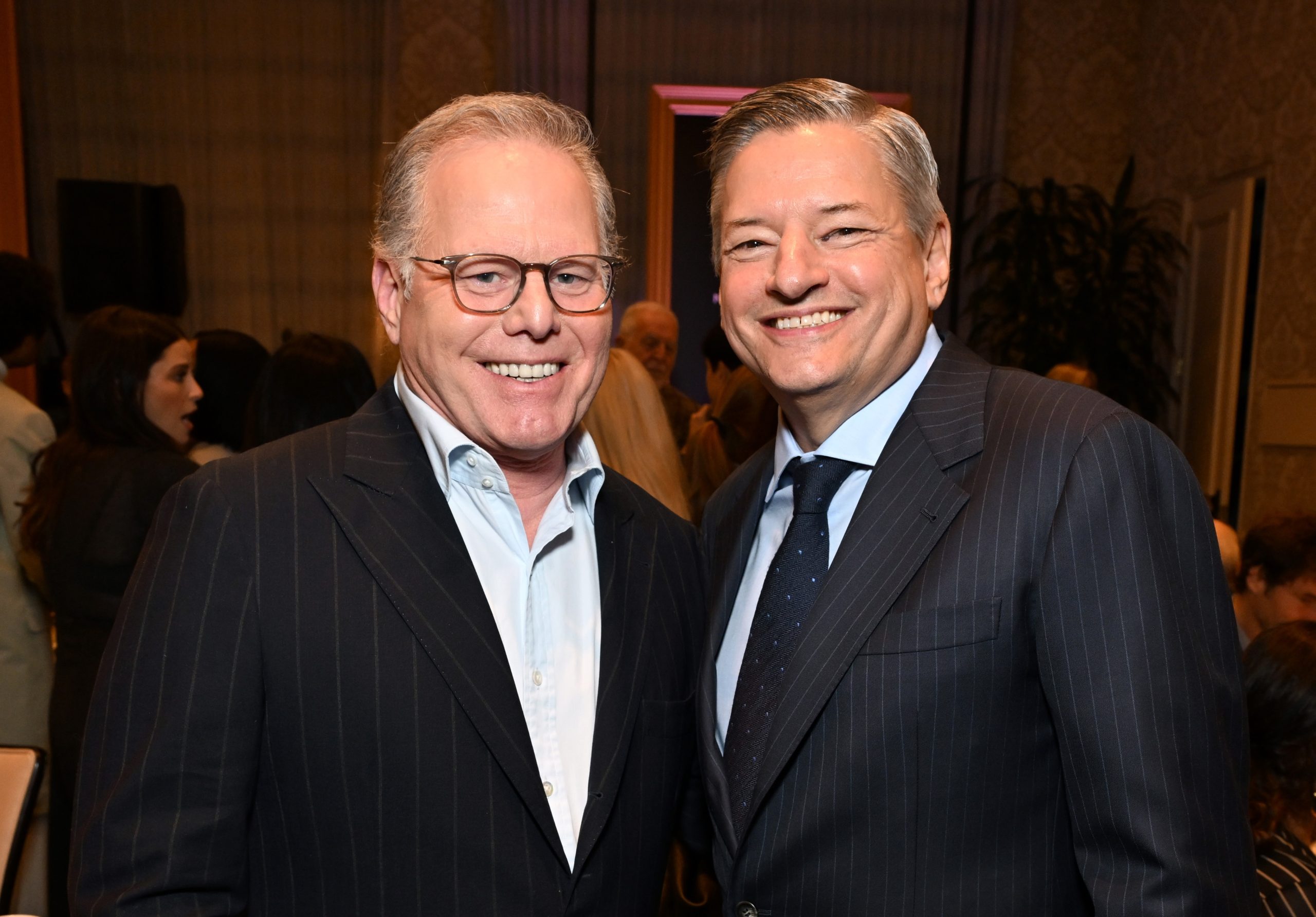
Warner Bros. Discovery CEO David Zaslav (L) and Netflix Co-CEO Ted Sarandos attend the AFI Awards on Feb. 6, 2025. Michael Kovac/Getty Images for AFI
Harry Potter, Batman and Tony Soprano are coming to Netflix. The streamer has beaten out rival media giants to acquire Warner Bros. Discovery’s film studio and HBO Max streaming service in a $72 billion deal sending shockwaves through Hollywood.
The two companies announced the agreement today (Dec. 5). WBD’s global networks business, which includes CNN, TNT Sports and Discovery, remains on track to spin out into a separate publicly traded company, as previously announced this summer.
“For more than a century, Warner Bros. has thrilled audiences, captured the world’s attention, and shaped our culture,” WBD CEO David Zaslav said in a statement. “By coming together with Netflix, we will ensure people everywhere will continue to enjoy the world’s most resonant stories for generations to come.”
The transaction, approved by both companies’ boards, is expected to close in 12 to 18 months. That timeline assumes the deal can withstand significant regulatory scrutiny given the companies’ dominance in streaming. Netflix currently has more than 300 million paid subscribers, while WBD has 128 million.
Some politicians have already voiced concerns. The deal “would raise serious competition questions—perhaps more so than any transaction I’ve seen in about a decade,” said U.S. Senator Mike Lee, a Republican from Utah, in a post on X. The Trump administration is also viewing the transaction with skepticism, according to CNBC, which cited a senior White House official.
The acquisition would bring hit HBO shows like The Sopranos, Game of Thrones, and The White Lotus to Netflix, along with WBD’s studio and television and film archives, which include Harry Potter, Friends, and the DC Universe. If the merger falls through, Netflix will owe a $5.8 billion termination fee, according to an SEC filing. WMD’s breakup fee would total $2.8 billion.
Beyond antitrust concerns, the acquisition has raised questions about how WBD’s theatrical business will fare under Netflix’s ownership. While Netflix has historically prioritized streaming and released only a limited number of films in theaters, the company said it intends to maintain WMD’s theatrical slate.
Not everyone is convinced. “The proposed acquisition of Warner Bros. by Netflix poses an unprecedented threat to the global exhibition business,” said Cinema United, a trade association representing movie theater owners, in a statement. The organization warned that the deal threatens 25 percent of the annual domestic box office, adding, “Theaters will close, communities will suffer, jobs will be lost.”
Netflix will also face pushback from rivals after emerging victorious in a heated bidding war. Comcast pursued WBD’s studio and streaming businesses, while Paramount sought to acquire the entire company, including its global networks division.
Paramount reportedly criticized both Netflix’s size and what it described as a skewed bidding process in a series of letters to WMD’s lawyers earlier this week. Awarding the deal to Netflix would “entrench and extend global dominance in a matter not allowed by domestic or foreign competition laws,” Paramount wrote, later accusing WMD of embracing “a myopic process with a predetermined outcome that favors a single bidder.”
